Paver Patios, Driveways & Walkways in San Jose and the Bay Area
Hardscape gives an outdoor space its structure: the patio where you eat, the driveway you park on, the walkway and steps that welcome guests. We design and install interlocking concrete paver surfaces, along with stone and concrete features, for homes in San Jose, the Peninsula, the South Bay and the East Bay.
A paver surface is only as good as what sits underneath it. That is why our crews build every base the way the Interlocking Concrete Pavement Institute (ICPI) says it should be built, and why we walk you through each stage instead of leaving you guessing.
Licensed, bonded and insured · CSLB #1138921 · Serving the Bay Area
What we build
- Paver patios and outdoor living areas
- Paver driveways and parking areas
- Walkways, entry steps and landings
- Seat walls, planter walls and retaining walls
- Borders, inlays and clean transitions between pavers and artificial turf
- Natural stone and concrete features
How we install pavers, step by step
Before anything is dug, we call 811 (USA North 811) so the utility companies can mark underground lines. It is mandatory, and we make the call ourselves, usually about four days before the start date. Then the work follows the ICPI sequence:
- Demolition and excavation. We remove the existing surface and dig out 8 inches for foot-traffic areas, or 10 inches where vehicles will drive.
- Subgrade. We compact the natural soil underneath.
- Geotextile. A fabric of strong fibers keeps the base separate from the soil and holds the area stable.
- Base. Class 2 base rock, 5 inches for foot traffic or 7 inches for vehicles, placed in layers and compacted to 98% following ICPI standards. Where the area needs it, we build the slope into the base so water drains away.
- Bedding sand. A level layer about ¾ to 1 inch thick.
- Pavers. Laid in the pattern you choose, typically Belgard pavers about 2½ inches thick.
- Border. Once the main pattern is down, we cut the edge along the whole perimeter and install the border on concrete so nothing can creep outward.
- Compaction. We compact the pavers so every one sits level.
- Polymeric sand. Swept into the joints and compacted until it reaches the bottom of every joint.
- Finish. We blow off the excess and lightly mist the surface with water to activate the binder that locks the pavers together.
Sealing is not part of our standard installation. If you would like your pavers sealed, we can do it as an optional extra at an additional cost.
Materials
Most of our paver projects use Belgard pavers. We also work with Techo-Bloc and Keystone Hardscapes, and finish the joints with polymeric sand from brands such as Techniseal and Alliance Gator. At the estimate we help you compare colors, textures and patterns against your home, your landscaping and the way you use the space.
Why pavers suit Bay Area ground
Bay Area ground moves. There are earthquakes, and in many neighborhoods there is expansive clay that swells in the rainy season and shrinks over the summer. A poured slab has to resist that movement as a single piece, which is why so many of them crack. Interlocking pavers flex with the ground, and a section that settles can be lifted, re-leveled and reset instead of replaced. We compare the two in more detail in our guide to pavers vs. concrete.
What affects the cost
No two patios or driveways cost the same, which is why we price each project after seeing it. These are the factors that move the number most:
- The size and shape of the area
- Foot traffic or vehicles, since driveways need a deeper excavation and a thicker base
- Demolition and hauling of existing concrete, grass or old pavers
- Access for equipment and material delivery
- Pattern, cuts, curves, steps and borders
- Drainage and slope
- The paver brand, size and color you choose
After the on-site visit you receive a clear, personalized estimate, so you know what is included before you sign.
Keeping pavers looking good
Paver surfaces are simple to care for. Sweep them, rinse them with a hose and pull any weed that sneaks in. If the joint sand drops over the years, topping it up keeps the pavers locked together. And if one spot ever settles, the pavers there can be lifted, the base corrected and the pavers set back in place.
Projects with this kind of work
Campbell, California
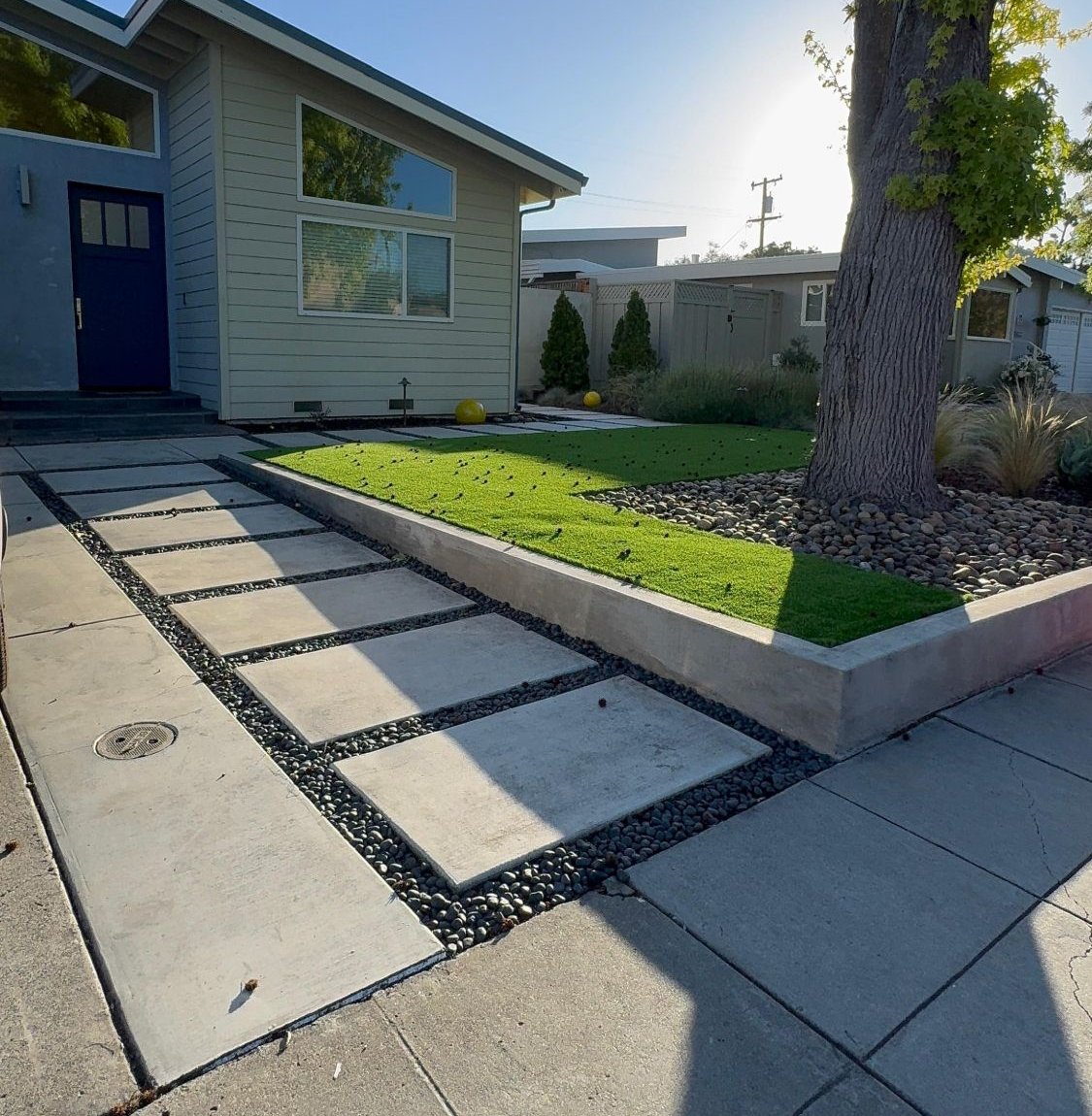
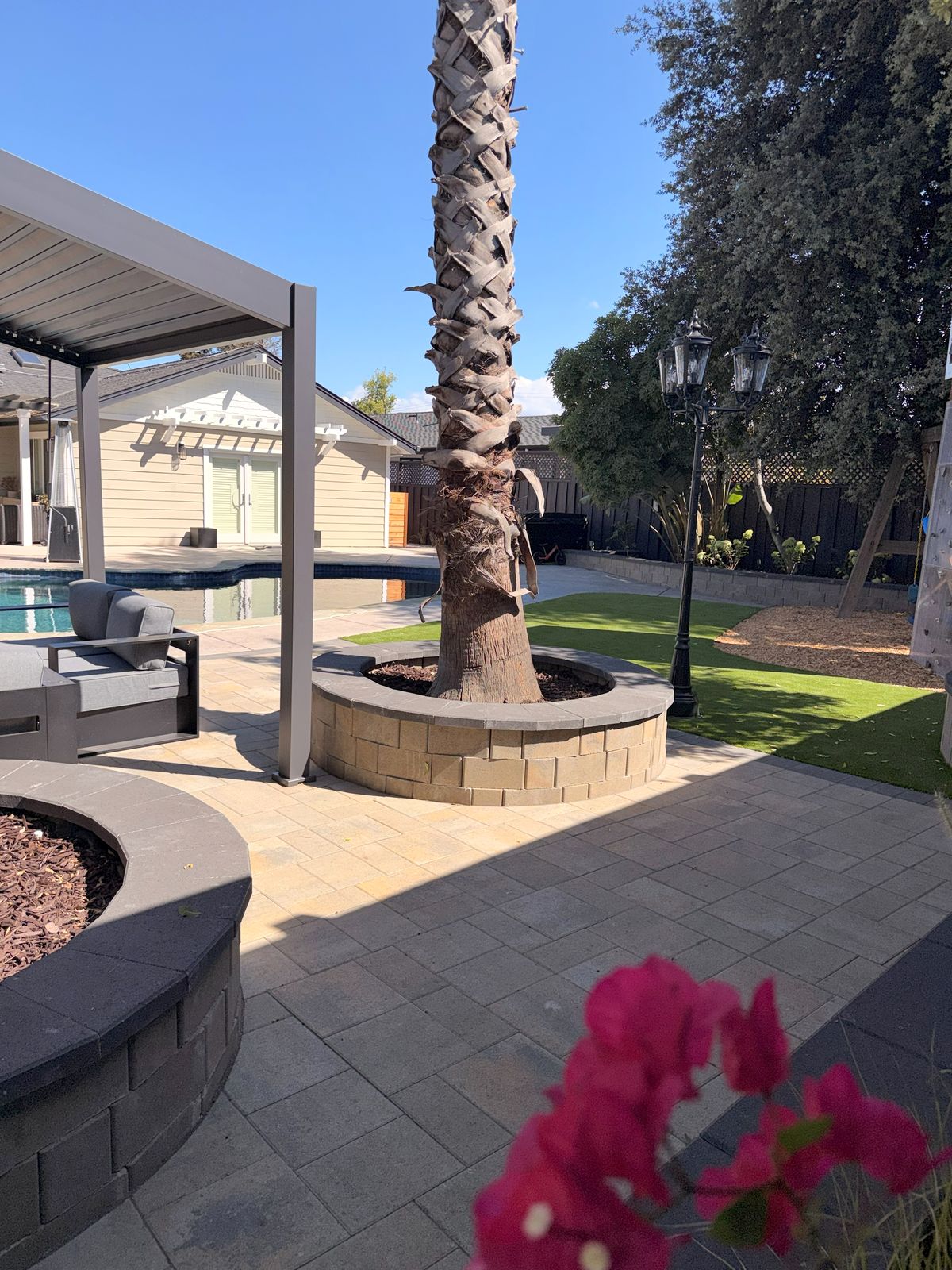
A side yard rebuilt with stepping-stone pavers, and a backyard with a paver patio, artificial turf and a louvered pergola.
See the project →Woodside, California
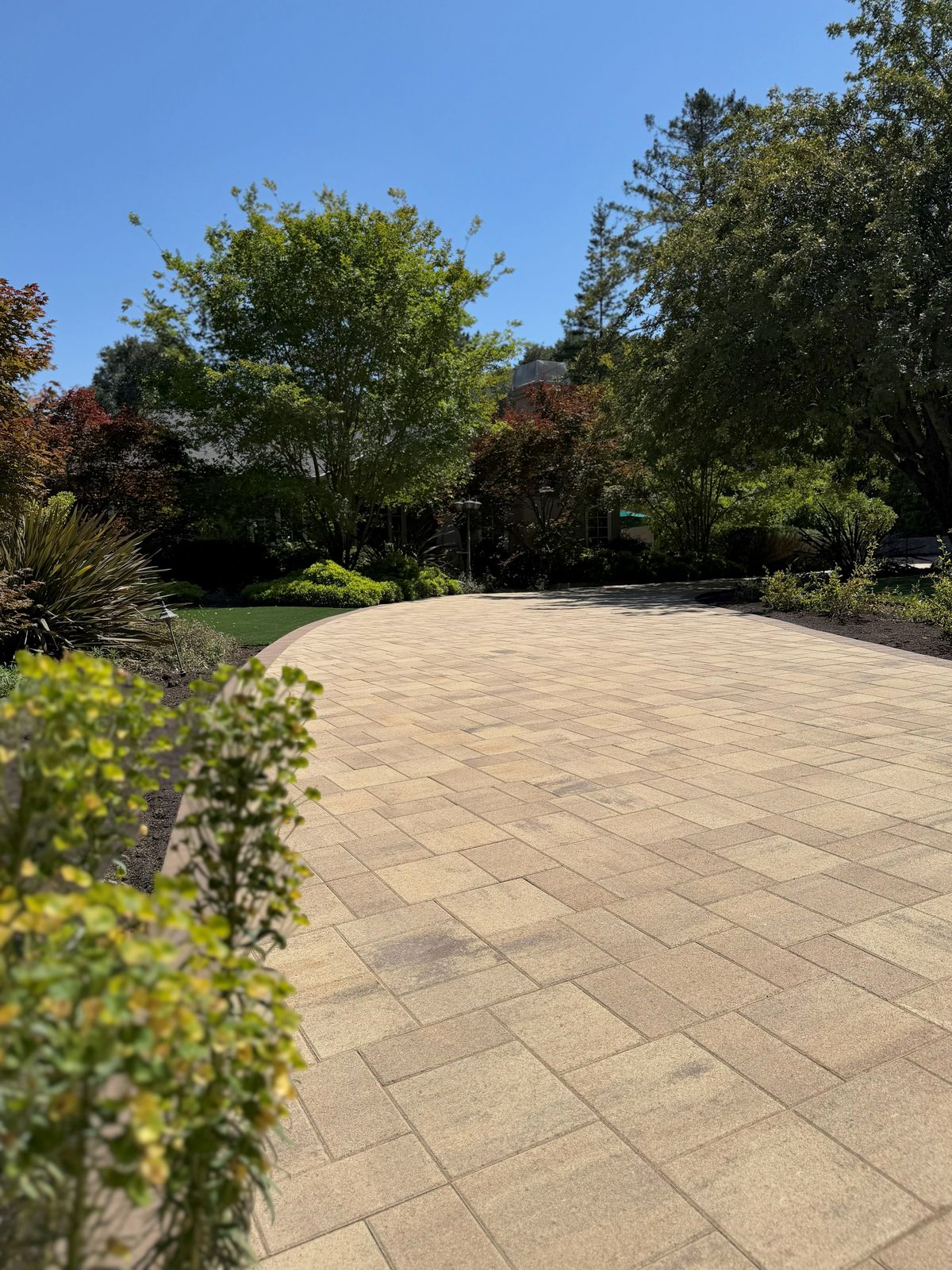
A curved paver driveway and courtyard in warm sand tones, edged with stone and framed by planting beds and an artificial turf lawn.
See the project →San Jose, California
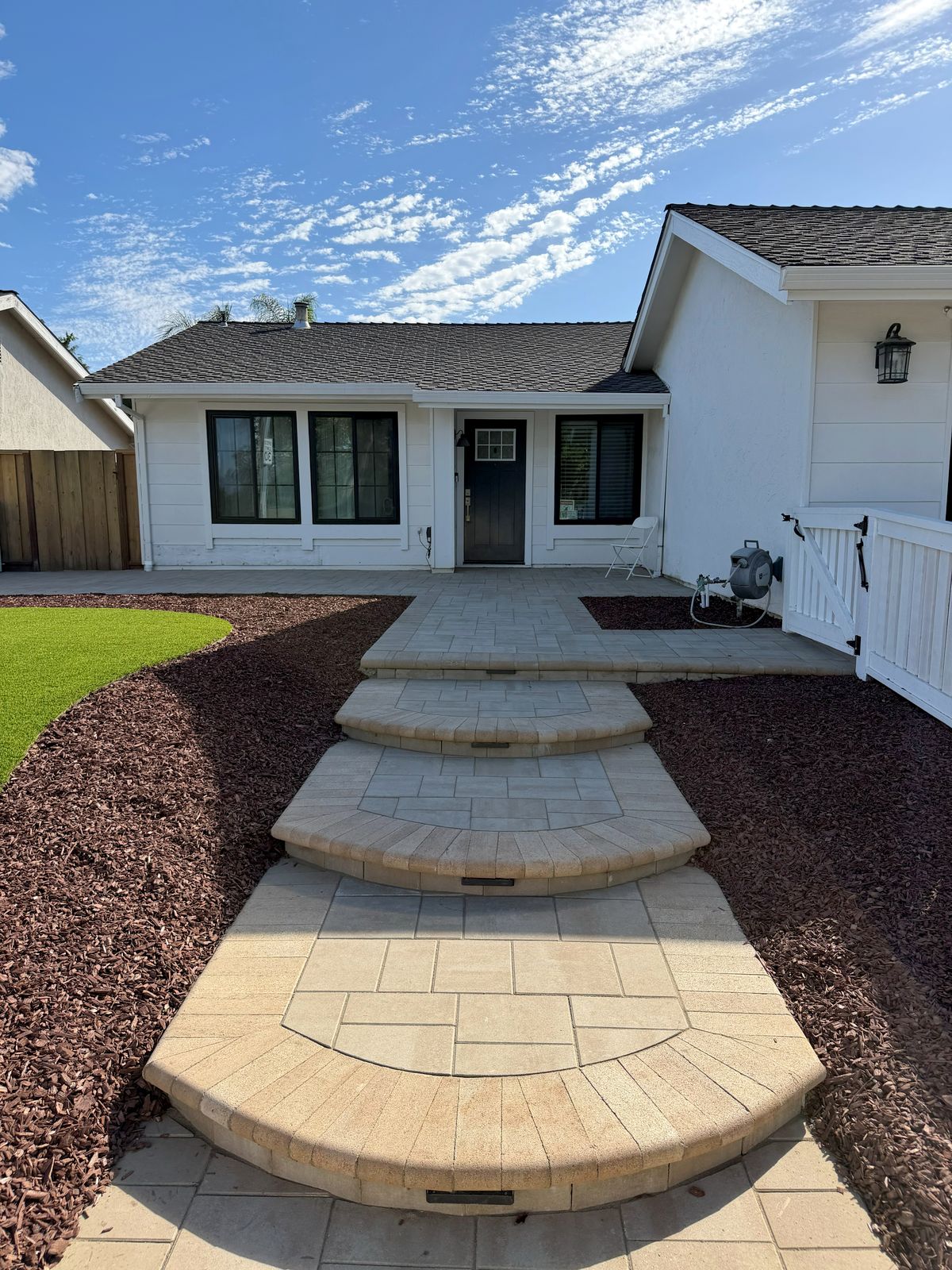
Curved paver steps lead to the front door, with an artificial turf island in red mulch inside a white picket fence.
See the project →Frequently asked questions
How long does a paver patio or driveway last?
A paver surface built on a properly compacted base can last for decades. Because every paver is its own unit, a spot that settles can be lifted and reset, something a poured slab cannot offer.
How deep do you dig for a paver patio or driveway?
We excavate 8 inches for foot-traffic areas such as patios and walkways, and 10 inches where vehicles will drive. That leaves room for the geotextile, the compacted Class 2 base, the bedding sand and the pavers.
Do you seal pavers?
Sealing is not part of our standard installation. It is available as an optional extra at an additional cost if you want it.
Do I need a permit for a paver patio or driveway?
It depends on your city and on the project. Driveways, larger patios and anything that changes drainage are the most likely to need review. Your city has the final word, and we will talk through what is likely to apply when we visit your property.
Can I stay home while you work?
In most cases, yes. The crew works outdoors, and we plan access and parking with you before the start date so daily life keeps moving.
Related reading