Artificial Turf & Natural Grass Lawns in San Jose and the Bay Area
A lawn should make your yard easier to enjoy, not hand you another chore. We install artificial turf and natural grass lawns for homes across San Jose and the Bay Area, and we will give you a straight opinion on which one fits your yard.
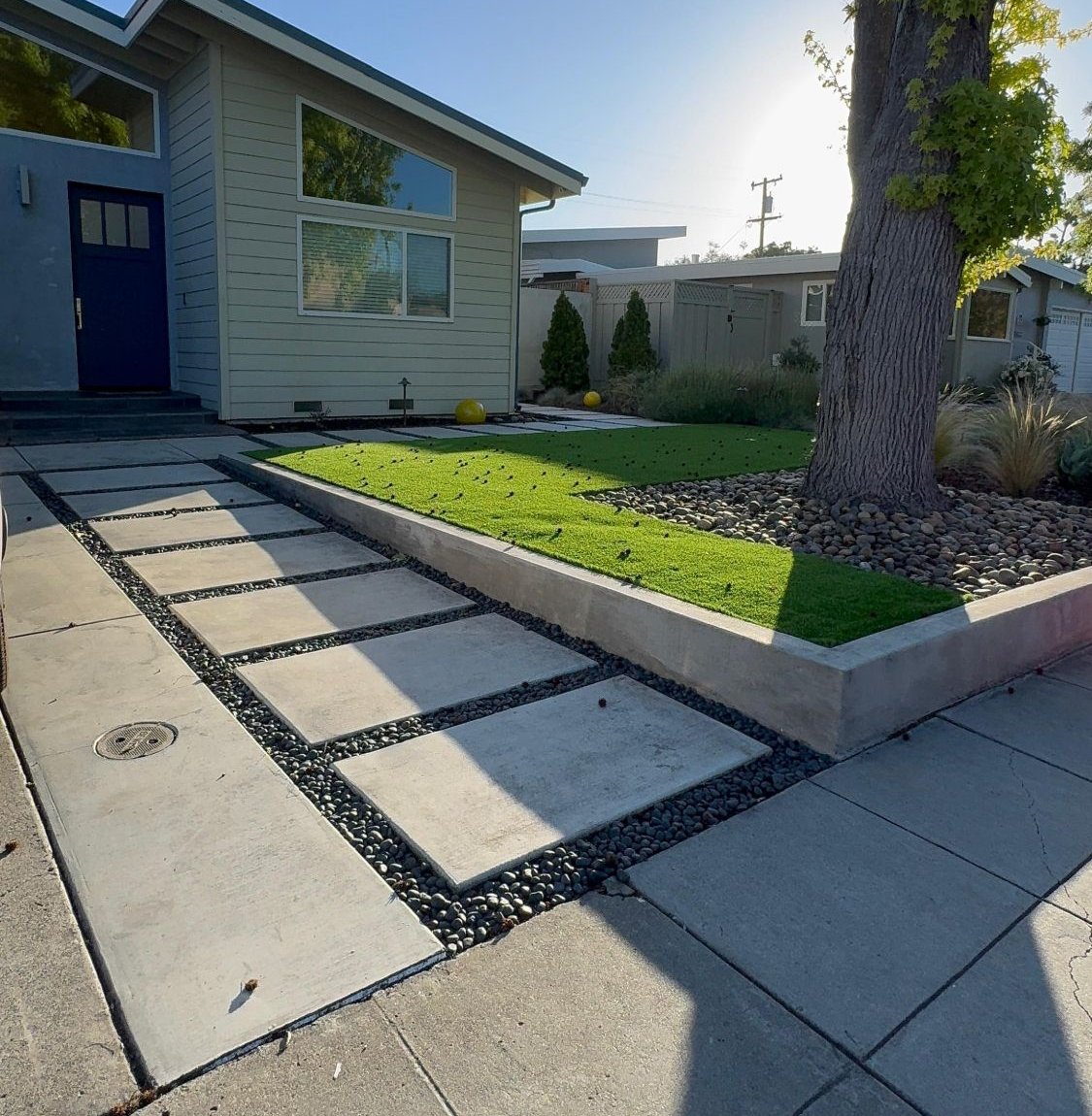
The details where a lawn meets patios, steps and planting beds decide how the yard looks and lasts. Turf next to pavers, for example, needs a clean edge and a base that drains.
Licensed, bonded and insured · CSLB #1138921 · Serving the Bay Area
Why homeowners choose artificial turf
- No watering, mowing or fertilizing
- Green all year, including through the dry summer
- A durable surface for kids, play areas and pets
- A clean look in side yards, shady corners and small front yards where grass struggles
- The freedom to shape the lawn, from a simple rectangle to a curved island
What a good turf installation includes
Turf looks only as good as what is underneath it. A properly built lawn includes:
- Full removal of the existing grass, roots and debris, not just the surface layer.
- A compacted aggregate or decomposed granite base, graded so water drains away.
- A weed barrier fabric to stop growth from below.
- Turf cut and seamed carefully, then secured along the edges so it does not lift.
- Infill brushed into the fibers so the blades stand up and the lawn holds its shape.
When natural grass is the better call
Real grass still makes sense if you want the feel of a natural lawn, if you have dogs that dig, or if you like to reseed and change the layout. Soil preparation, grading and irrigation are what separate a lawn that thrives from one that fights you all summer. For many yards the best answer is a mix: turf where the traffic is, and real grass or planting beds elsewhere.
Turf, pavers and borders
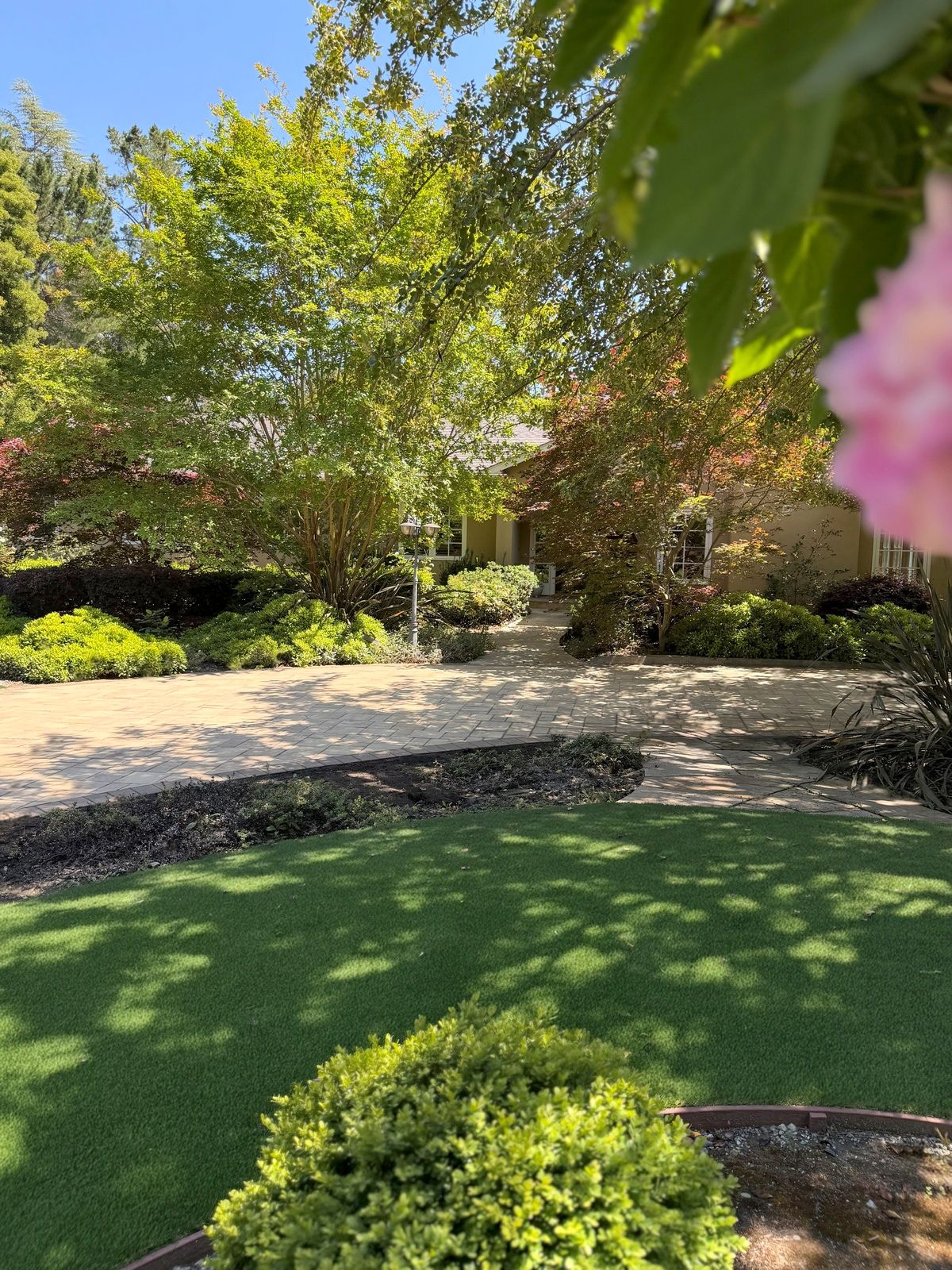
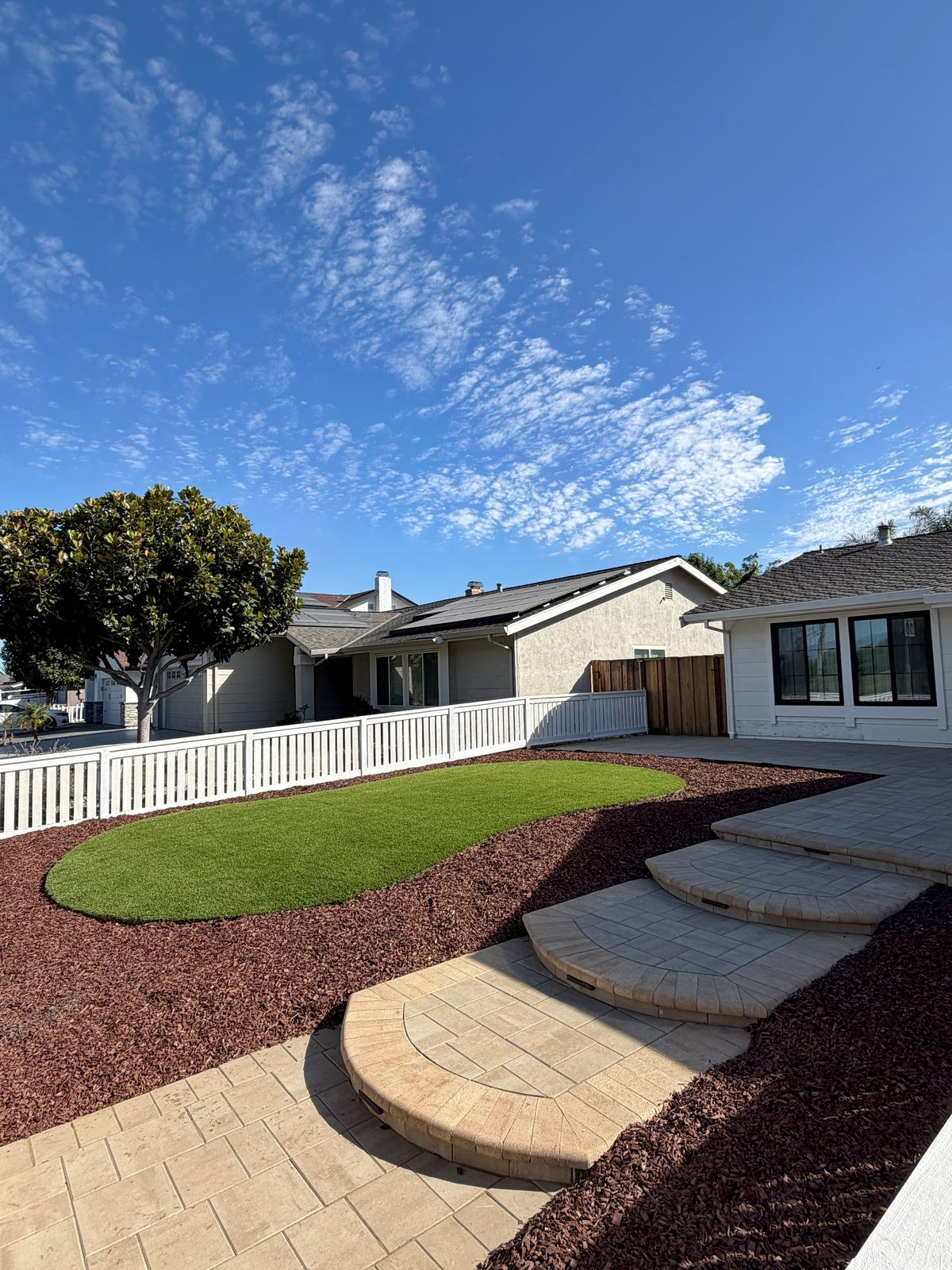
Many of our yards combine turf with pavers: a paver patio with a lawn beside it, or an island of turf set into red mulch like the one in our San Jose project. A firm edge, such as a paver or stone border, keeps the turf tidy and stops it from wandering.
What affects the cost
- The area to be covered and how many curves it has
- Removing and hauling the existing lawn
- Slope and drainage
- The depth and type of base
- The turf itself: pile height, density, backing and color blend
- Edging details against pavers, walls and planting beds
Caring for your lawn
Artificial turf asks for very little: an occasional brush, a rinse where pets use it and a leaf blower for fallen leaves. It can feel warm in direct afternoon sun, so shade and a quick rinse help on the hottest days.
Projects with this kind of work
Campbell, California
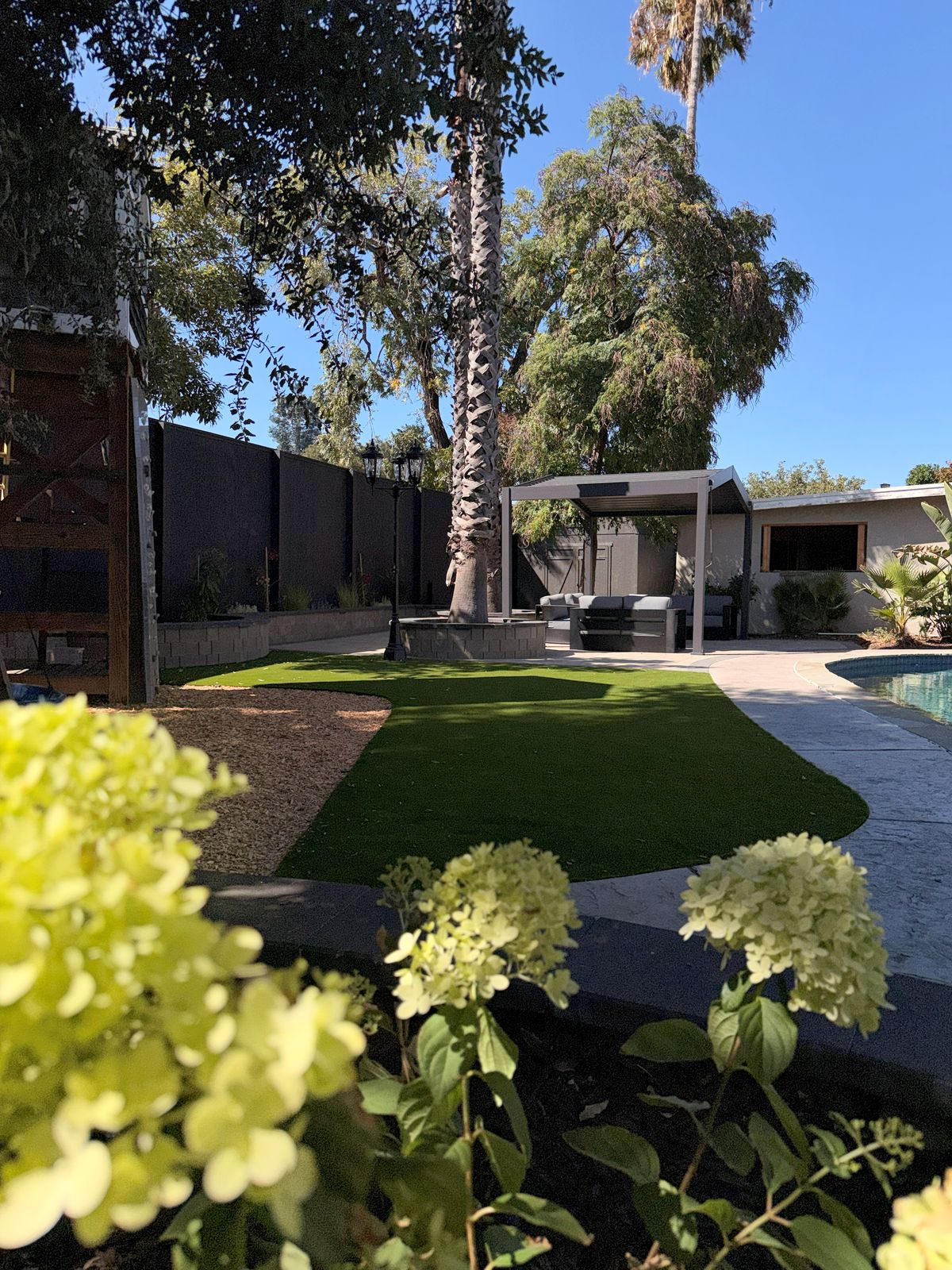
A side yard rebuilt with stepping-stone pavers, and a backyard with a paver patio, artificial turf and a louvered pergola.
See the project →San Jose, California
Curved paver steps lead to the front door, with an artificial turf island in red mulch inside a white picket fence.
See the project →Woodside, California
A curved paver driveway and courtyard in warm sand tones, edged with stone and framed by planting beds and an artificial turf lawn.
See the project →Frequently asked questions
How long does artificial turf last?
Quality turf installed on a good base lasts many years. The fiber quality, how heavily the lawn is used and how much sun it gets all matter, and we will point out the differences when you choose.
Is artificial turf good for dogs?
Many homeowners with dogs choose it. A base that drains well matters, solid waste should be picked up, and the area should be rinsed from time to time. Tell us about your pets at the estimate so we can plan for them.
Does artificial turf get hot?
It can feel warm in direct afternoon sun, as any dark surface does. Shade from a tree or pergola and a quick rinse help.
Do you remove my existing lawn first?
Yes. The old grass, roots and debris come out completely before the base is built, because turf laid over an old lawn will settle and wrinkle.
Related reading