
Landscape Lighting & Irrigation in the Bay Area
Lighting and irrigation are the systems nobody notices when they work and everybody notices when they do not. We install landscape lighting and irrigation for homes across the Bay Area, planned together with the patio, the lawn and the planting around them.
The order of the work matters. Wiring and pipe are far simpler to place before pavers and turf go in, so we like to plan both systems at the start of the project rather than at the end.
Licensed, bonded and insured · CSLB #1138921 · Serving the Bay Area
Campbell, California 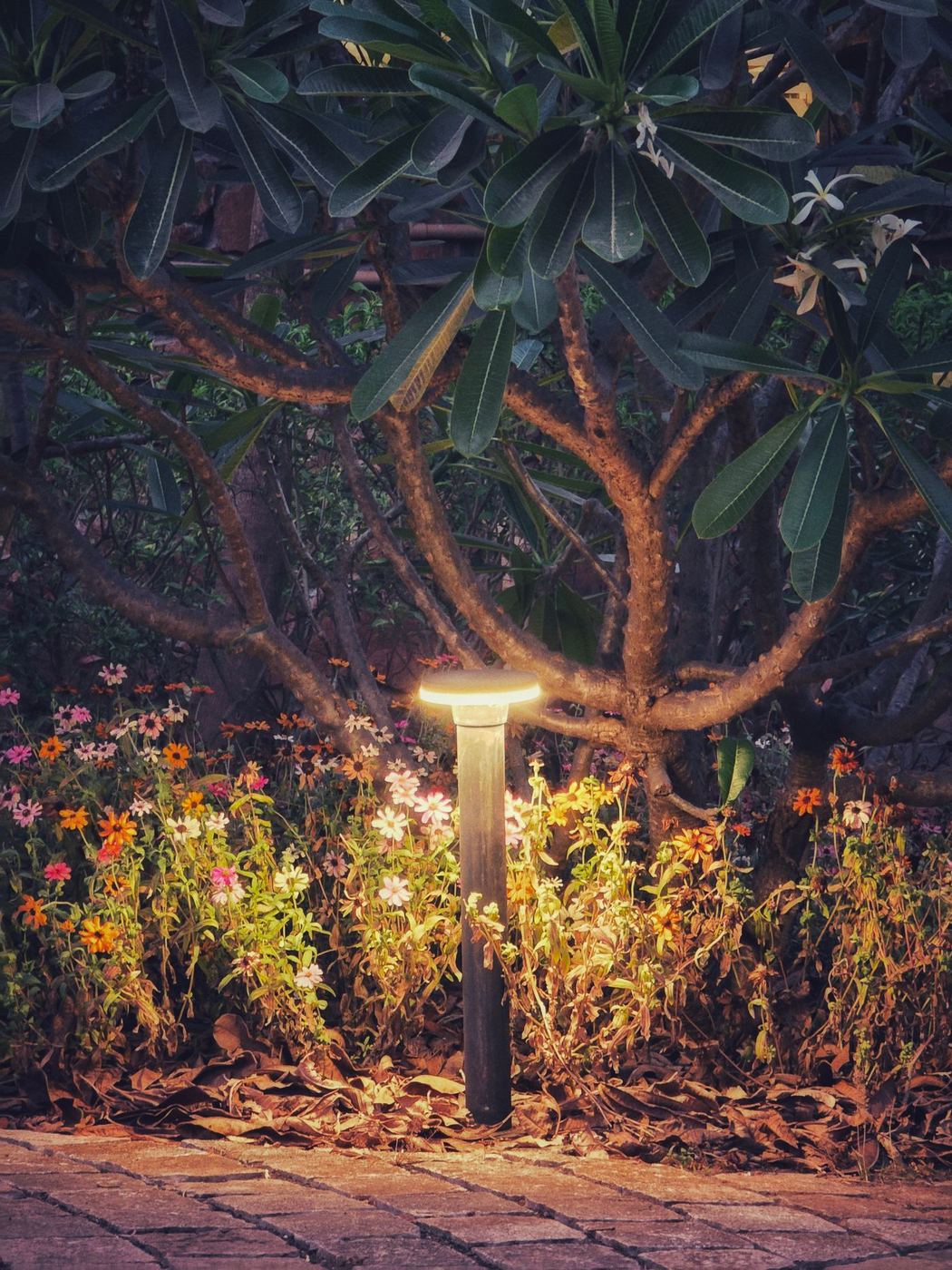
Illustrative photo · Shashwat Goyar / Pexels 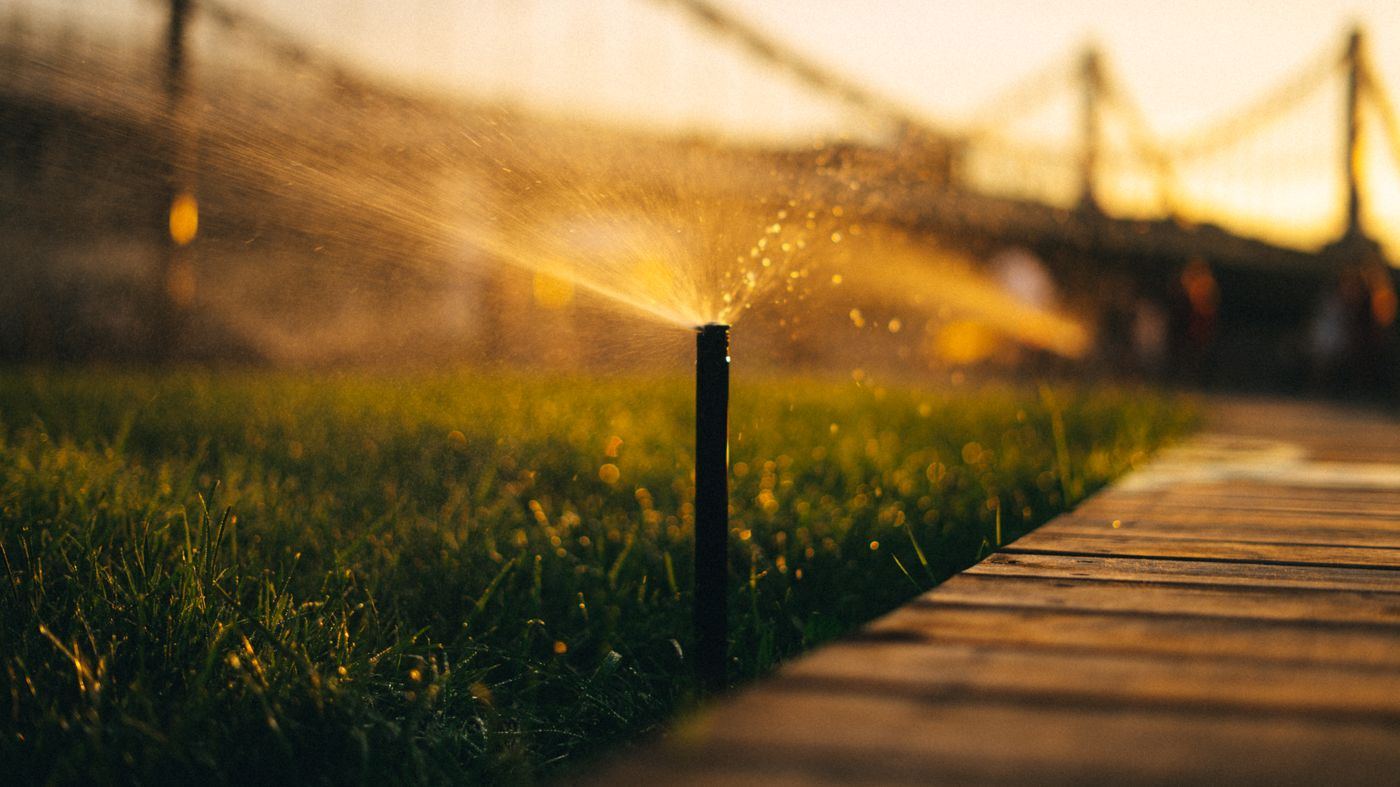
Illustrative photo · Daria / Pexels
Landscape lighting
Good lighting does three things: it makes paths and steps safer at night, it shows off the best parts of the yard, and it makes the space feel finished.
- Path and step lights for safe footing
- Uplights on trees, walls and architectural features
- Accent lighting for pergolas, seat walls and planting beds
- Low-voltage LED fixtures with a transformer and a timer or smart control
We source lighting from suppliers such as Pro-Trade Lighting, and we choose fixtures that suit the style of your home.
Irrigation
An irrigation system should water what needs water, when it needs it, and nothing else. That usually means separate zones for lawn and planting beds, drip lines for beds and shrubs, and a smart controller that adjusts to the season.
If you are replacing a lawn with artificial turf, the old sprinkler lines can be capped or reworked so they serve the planting beds that remain.
Why plan them with the hardscape
The smartest time to run power and water is before a patio or driveway is built. Sleeves placed under pavers let cables and pipes cross a paved area without cutting into it later, and fixtures can be set into walls and borders while they are being built.
What affects the cost
- The number of fixtures and how much cable has to be run
- Whether paved areas have to be crossed, and whether sleeves are already in place
- The number of irrigation zones, valves and the type of controller
- How much of the existing system can be reused
- Trenching through lawn, planting beds or hard soil
- The fixtures themselves: material, finish and light output
Looking after both systems
Lighting needs very little: wipe the lenses once in a while and trim plants that grow in front of a fixture. Irrigation is worth a glance every season. Run each zone, look for leaks or clogged heads, and adjust the schedule as the weather changes. A smart controller can handle most of that for you.
Projects with this kind of work
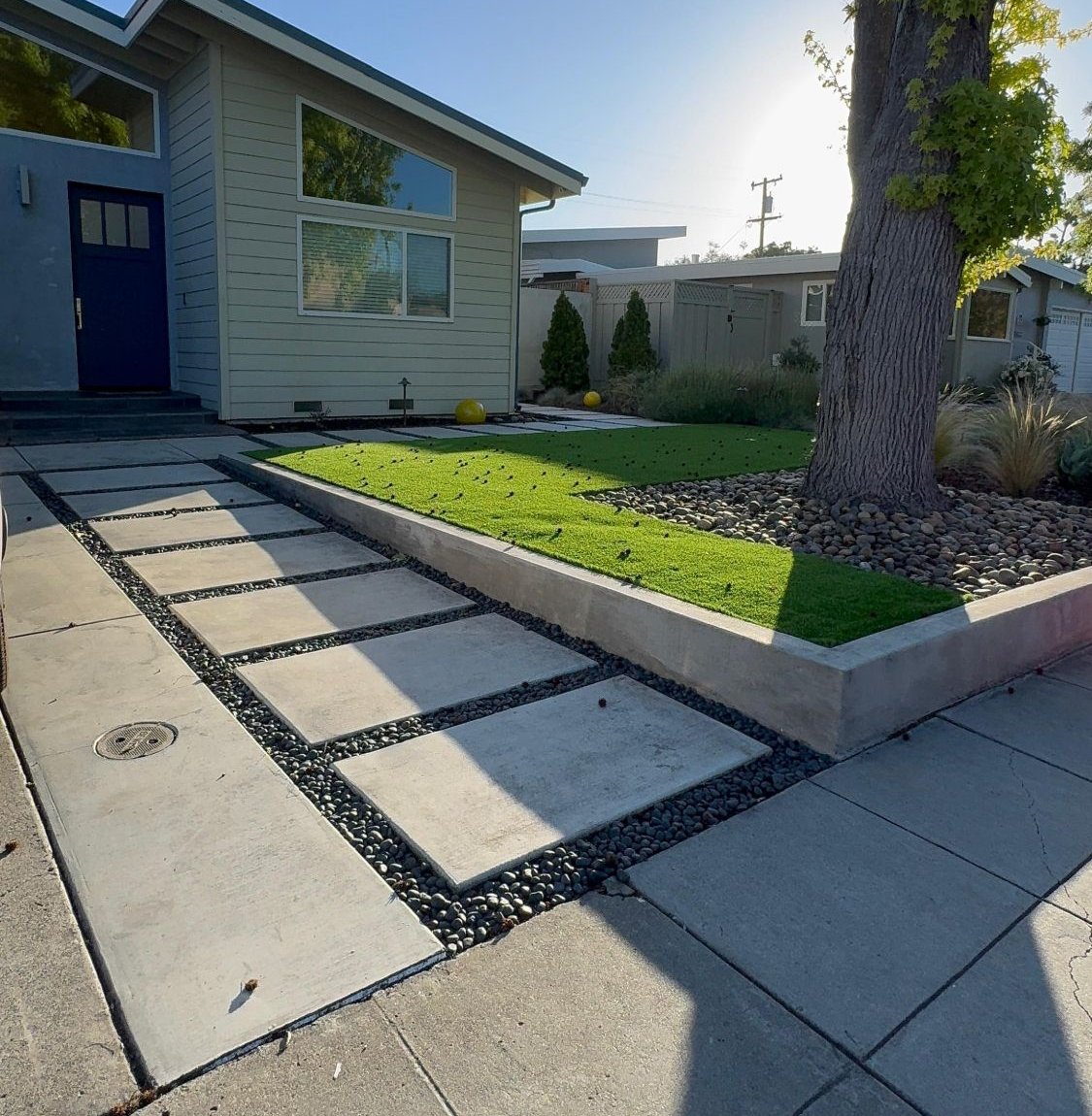
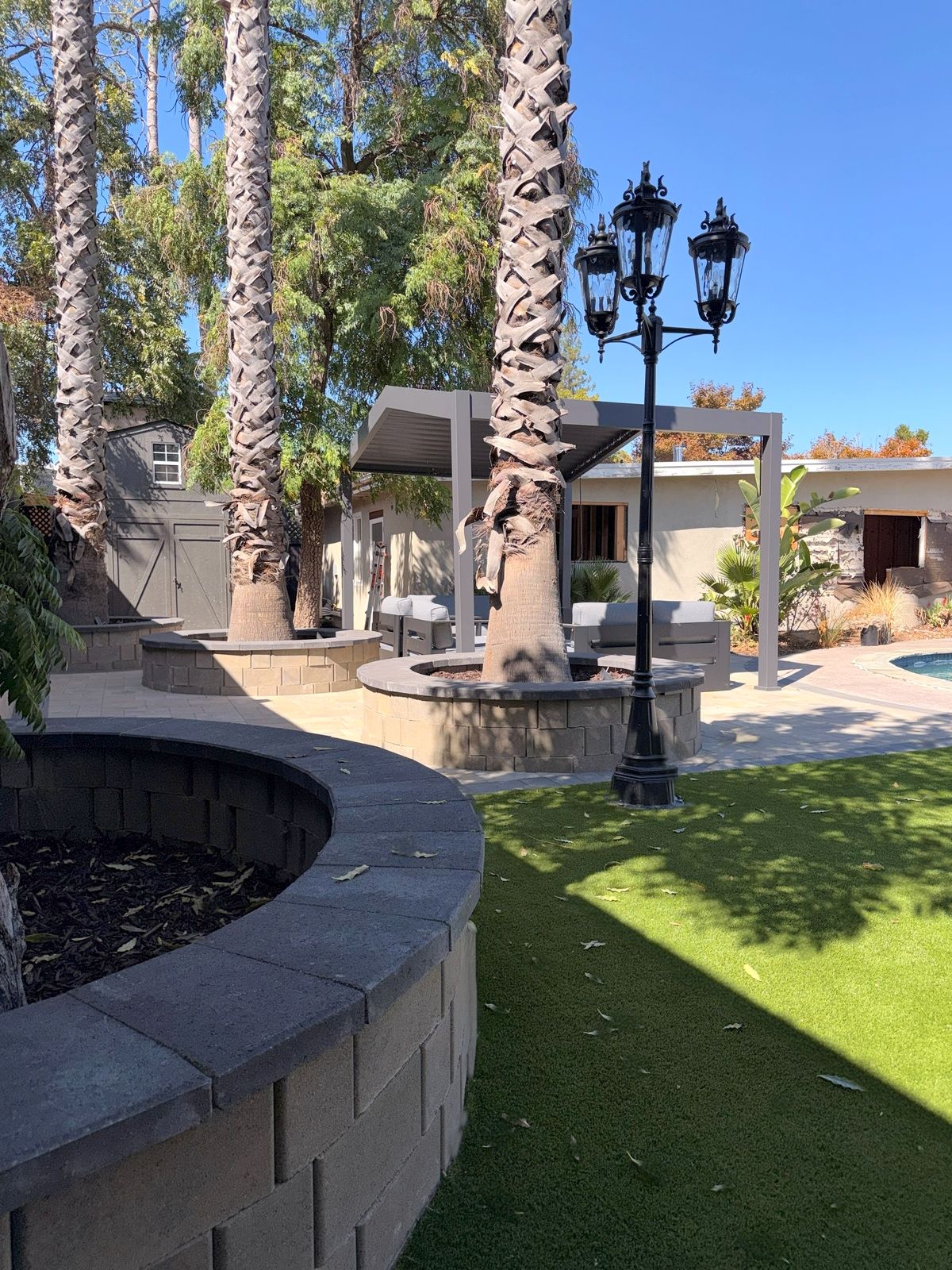
Campbell, California
A side yard rebuilt with stepping-stone pavers, and a backyard with a paver patio, artificial turf and a louvered pergola.
See the project →Woodside, California
A curved paver driveway and courtyard in warm sand tones, edged with stone and framed by planting beds and an artificial turf lawn.
See the project →Frequently asked questions
Is low-voltage landscape lighting safe?
Low-voltage systems typically run at 12 volts, which is far lower than ordinary household wiring, and the fixtures are made to stand up to the weather.
Can I control the lights from my phone?
Many modern lighting systems offer timers, dusk-to-dawn sensors and app control. We will go over the options that fit your project.
Can lighting be added to an existing patio?
Often, yes. Fixtures can go on walls, steps and planting beds and the cable can run along edges. Adding it while the surface is being built is simpler, because the wiring can be hidden underneath.
Does artificial turf need irrigation?
No. The turf itself needs no watering, but the shrubs, trees and planting beds around it still do, so most yards keep a reworked irrigation system for those areas.