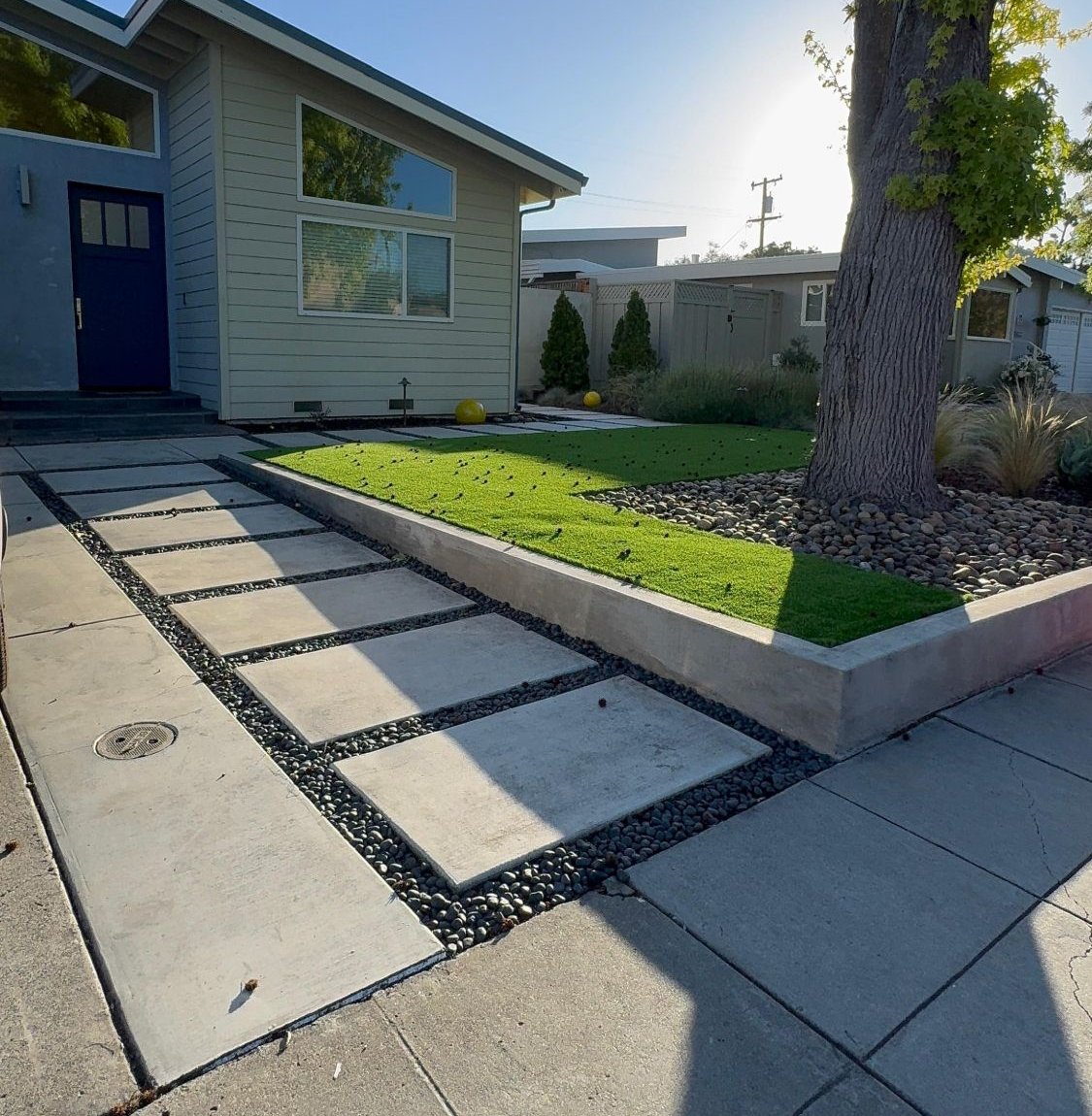

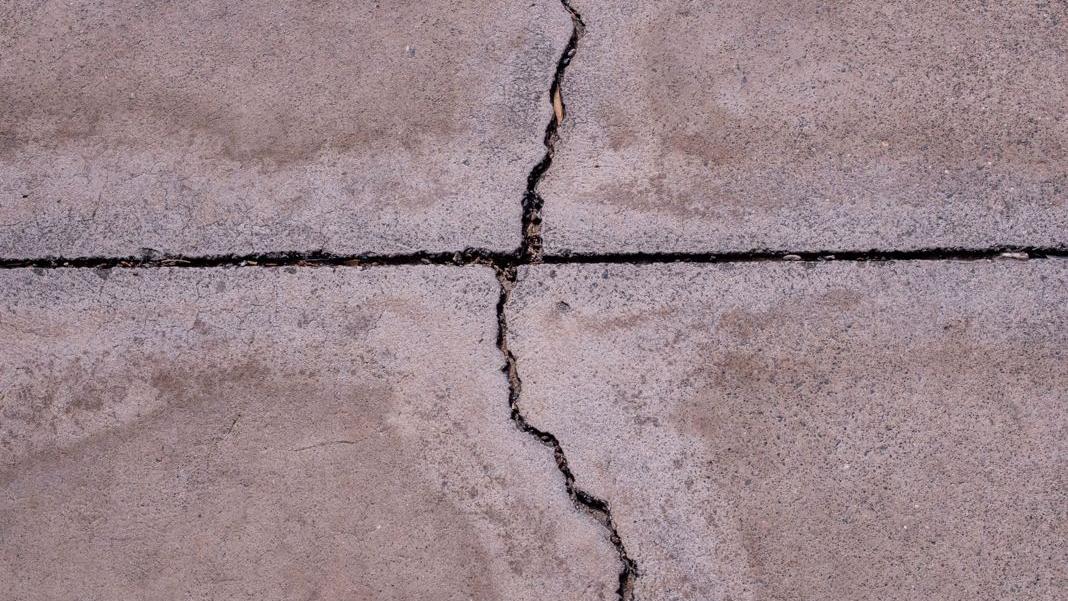
If you've lived in the Bay Area for a while, you've probably seen it: a poured concrete driveway or patio with a crack running across it, sometimes just a few years after it was installed. It's rarely a sign of bad concrete work — it's usually just physics. A rigid slab and moving ground don't mix well, and the Bay Area gives the ground two separate reasons to move.
Reason one: we live in earthquake country
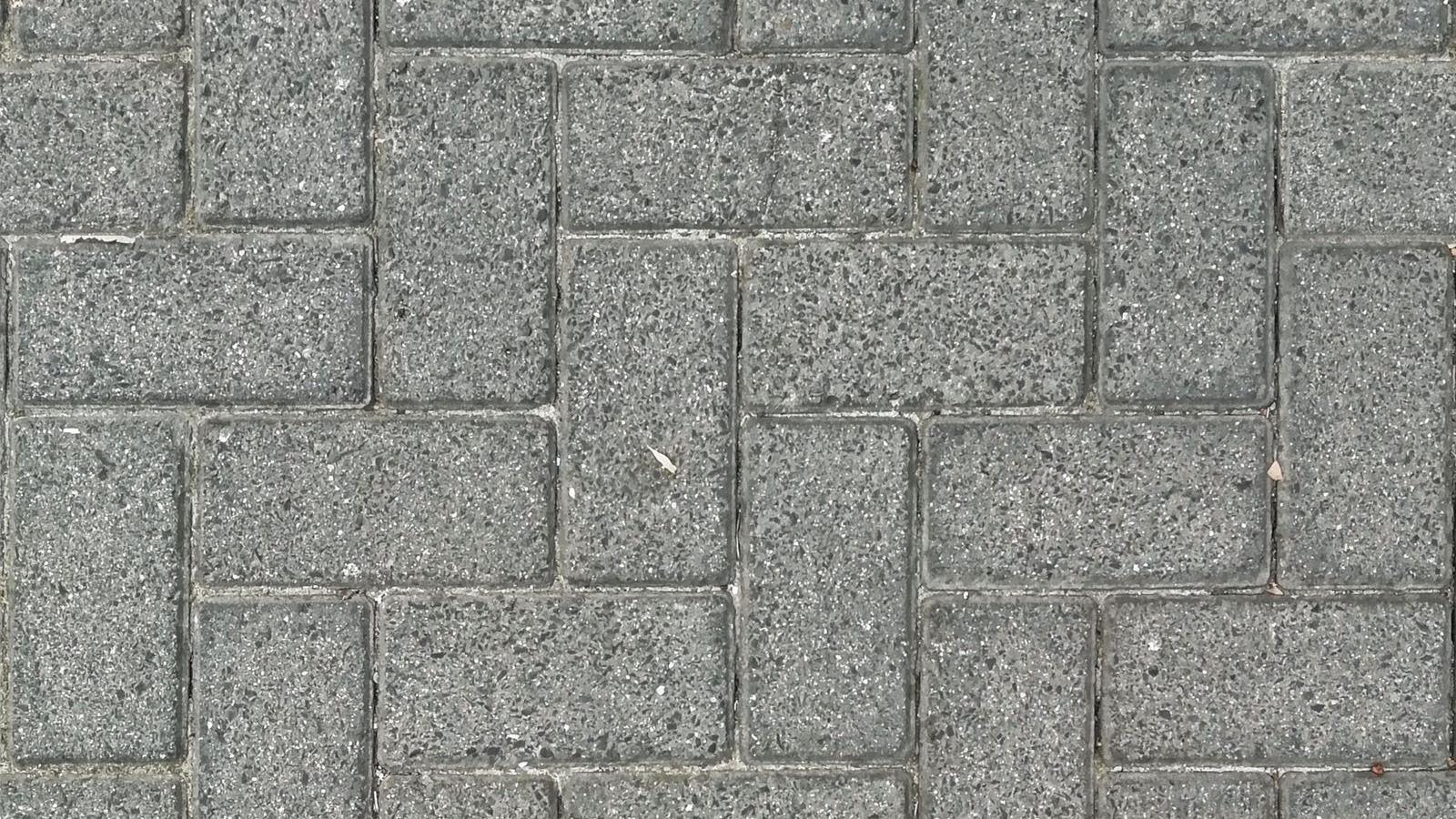
Poured concrete is a single rigid sheet. When the soil beneath it shifts — even slightly, during a minor tremor most people barely notice — the slab has only two options: hold perfectly still, or crack. Interlocking pavers behave differently. Each paver is an individual unit, separated by joints filled with sand. When the ground moves, that sand allows each paver to shift slightly relative to its neighbors and absorb the movement, instead of forcing one giant surface to resist it as a single piece.
Reason two: our clay soil moves even without an earthquake
Large parts of the Bay Area — especially low-lying areas near the bay itself — sit on expansive clay soil, sometimes called bay mud. This type of soil absorbs water and swells during the rainy season, then shrinks again as it dries out over summer. That constant expand-and-contract cycle pushes on anything rigid sitting on top of it, which is a major reason so many concrete driveways, sidewalks, and patios in the region develop cracks and uneven lips even with no seismic activity at all. A flexible paver surface tolerates this seasonal movement far better than a solid slab.
The repair difference is just as important
This is the part homeowners appreciate most once it actually happens: if one section of a paver patio settles, cracks (rare, but possible on a manufacturing defect), or gets stained beyond cleaning, the affected pavers can be lifted, the base underneath corrected, and the pavers reset, often without leaving a visible patch. A cracked concrete slab doesn't offer that option. You're looking at a visible patch, a saw-cut and repour of a whole section, or living with the crack.
None of this means concrete is a bad material — it has its place, and it's often the right call for certain budgets or designs. But if you're specifically weighing durability against Bay Area ground movement, interlocking pavers installed to ICPI standards (compacted base, proper edge restraint, correct joint sand) are the more forgiving long-term choice. You can see how we build them in our step-by-step guide to the ICPI installation process.
Want an honest opinion on which makes sense for your property? We'll walk your site and tell you straight — no pressure toward whichever material happens to be more profitable for us.